
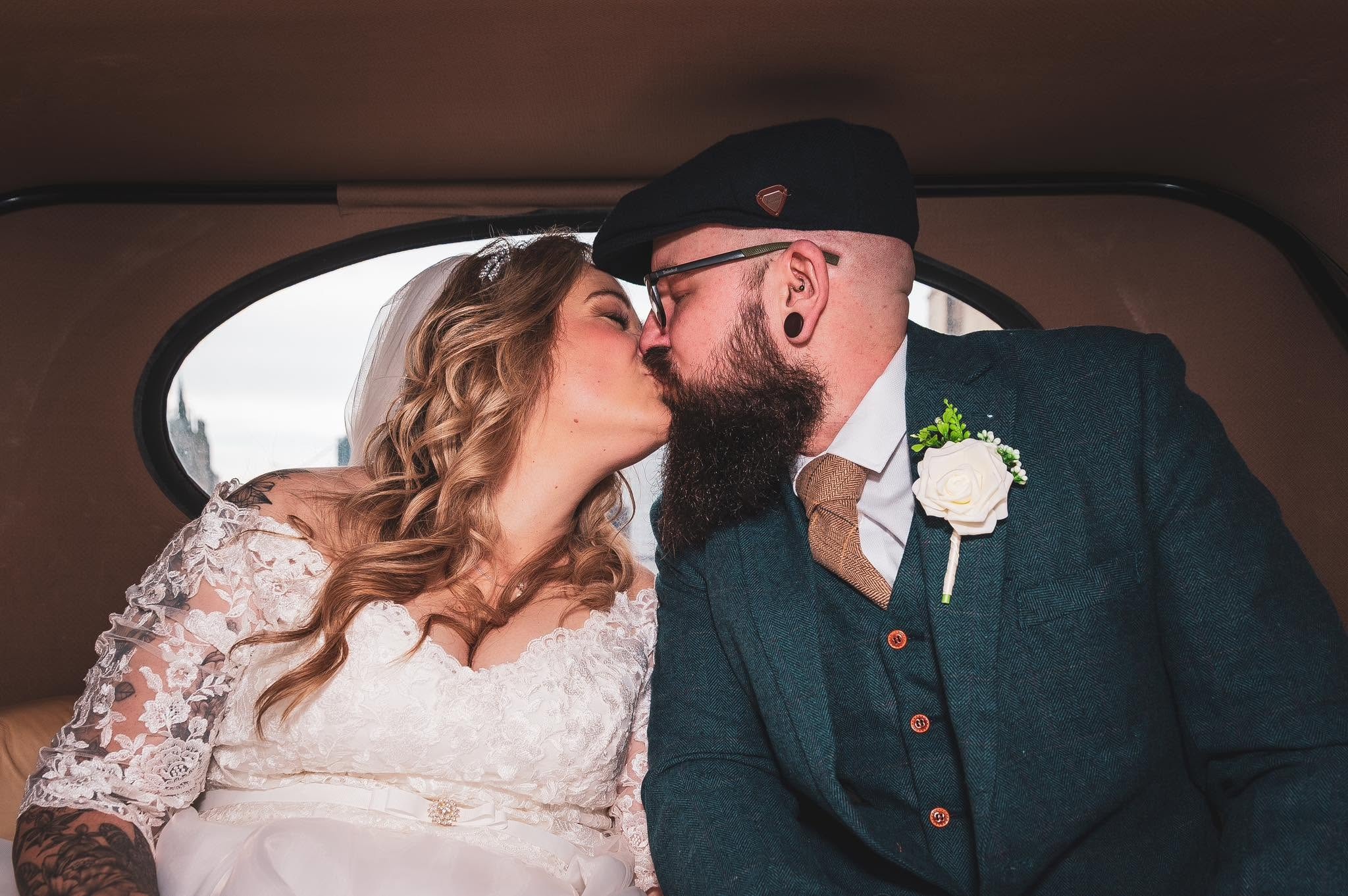
Most people arrive at their wedding having spent years avoiding cameras, then suddenly find themselves at the centre of hundreds of photographs. It is completely normal to feel nervous about that.
I hear the same worry again and again: “We’re not very good at photos.” The good news is that you do not need to be. Your wedding is not a modelling job, and you should not have to spend the day wondering whether your hands are in the right place or whether you are smiling naturally enough.
Relaxed wedding photography starts long before I press the shutter. It begins with a conversation, an understanding of what makes you comfortable, and a plan that leaves room for the day to feel like your own.
The camera should never become the main event
Imagine the morning of your wedding. One person is trying to find a missing buttonhole, somebody else has put the rings somewhere “safe”, and a family member has started crying before anything has even happened. Those are not interruptions to the story. They are the story.
My job is to notice those moments without turning every one of them into a production. I might quietly move to find a better angle or suggest standing near a window where the light is kinder, but I am not there to stop the flow of the day and rebuild it for the camera.
The same applies after the ceremony. You may want a few group photographs and some time together as a couple, but that does not mean disappearing for hours while everybody else enjoys the reception. A short walk, a conversation and a little gentle direction are often enough to create photographs that feel natural because something real is still happening between you.
What relaxed direction actually looks like
“Natural” does not mean leaving you stranded while I stand silently behind a camera. If you need help, I will give it. The difference is that the guidance should feel simple and human rather than like a list of rigid poses.
I might ask you to walk together, look at one another, take a moment to breathe, or move into softer light. I may straighten something that has twisted or suggest where to stand so the background works better. Then I let the moment unfold.
That usually solves the famous “what do I do with my hands?” problem too. You hold each other, carry your bouquet, adjust a jacket, wipe away a tear or laugh because the whole situation feels slightly ridiculous. The aim is not to manufacture emotion. It is to give you enough space for the real emotion to show.
No awkward posing. No weird vibes. Just photographs that still feel like you.
The best moments are often the ones you missed
Some photographs will be of moments you remember clearly: walking into the ceremony, exchanging rings, throwing confetti or taking your first dance. Others will show you parts of the day you never saw.
It might be the expression on a parent’s face just before the ceremony, a friend fixing a dress or tie, somebody laughing two tables away during the speeches, or a child asleep under a coat while the dance floor carries on around them. These photographs matter because a wedding day is bigger than the moments written on the schedule.
This documentary approach also means your gallery should feel varied. There will be portraits worth putting on the wall, but there will also be movement, atmosphere, details, people and the joyful chaos that made your day different from everybody else’s.
Choose the person, not only the portfolio
Of course you should love a photographer’s work, but you also need to feel comfortable with the person making it. Read how they describe their approach. Ask what happens if you feel overwhelmed, if family photographs become complicated, or if you simply need five minutes without a camera nearby.
Clear communication matters. Respecting names, relationships, family structures and personal boundaries matters. A wedding photographer spends a large part of the day close to you, so the experience should feel safe, calm and easy.
I photograph weddings across Norfolk, Suffolk and the rest of the UK. If you are worried about being photographed, that is not a reason to avoid the conversation. It is one of the most useful things you can tell me at the start.
Tell Ben about your wedding